What should you do on the days you do not feel like training?
Show up and do the work as well as you can that day. Grayson says that if you are only at 80 percent, giving all of that 80 percent is the most anyone can ask of you, and it still counts.
He learned this over years of nine sessions a week. Some days you are tired, sick or carrying life outside training, and the session will not be your best. What decides progress is not one session but the total time you put in. Showing up at less than full capacity still beats staying home, and next time you aim for 81.
“If you’re not feeling great, you still show up and do the work as best as you can. Even though you’re not feeling 100%, you’re giving 100% on that day.”
For more on this, read how to stay consistent with training and should I train today.
How do you get over a bad training session?
Grayson’s answer is gratitude. After a bad session, he deliberately shifts his focus from the one session that went wrong to everything that is going right.
As a teenager, one bad session would ruin his day. He wanted to be fastest every time, and when the times did not come, he kept asking himself why. Working with a sport psychologist over many years taught him a different routine. On the drive home from training, he reflects on the session, then on what he is grateful for and what he is looking forward to, even something as simple as a surf on the weekend.
“You don’t hit a personal best. You don’t make the team. Yeah, it does suck and it really hurts and breaks your heart. But then as well, it’s not the end of the world.”
Related: guilt about skipping a workout and does mood affect workout performance.
How do you keep going when the results do not come?
Back yourself. Grayson spent three years trying to make his first senior team, and later another four years trying to make his second, and says self-belief and the people around him carried him through both.
It started early. At 14 or 15, he missed qualifying for his first nationals by 0.01 seconds, watched his teammates go without him and had to wait a whole year. The next year he qualified. The first long stretch came straight after school. Friends went to university or moved away, training partners left the sport, and he kept chasing one specific goal every year. Later, when he changed coaches and his training dropped from about 50 kilometers a week to about 20, the doubt came back. His answer was the same: if you made the plan well, trust it.
“You have to back yourself. You made the decision, and so you just keep targeting it, and you don’t realize how far you’ve come until you look back at it.”
Related: motivation to start working out again.
How do you break a big goal into smaller goals?
Keep the main goal fixed and let the small goals change. Grayson says the pursuit stays the same, but the sub goals that get you there are adjusted whenever one stops working.
For one season, his target meant dropping a few tenths of a second. Working back from that, he picked two things to improve, his start and his turn, and built the plan around them: stronger legs, more power off the blocks, a better breakout. If one approach stopped working after a fair try, he switched to another area, such as mobility. He worked with four coaches across swimming, strength, nutrition and mindset, and all four worked toward the same goal.
“The pursuit for that major goal stays the same. But the sub goals to reach that can change quite a bit.”
Related: how to build an exercise habit.
Why does Grayson write down every session?
Because small goals only help if you can see them. Grayson journals after every session: what went well, what did not, and what to improve. In one buildup he logged his start and turn times almost every day.
Without small goals written down, he says, six weeks into a twelve week plan you can feel like you are going nowhere. With them, you can look back and see each step. One of his coaches put it simply: if you do not track it, you cannot measure it. Bad sessions go in the journal too, followed by what he is grateful for. Good sessions go in as confidence for the next one.
“If you have all those small goals, you can look back and see, oh, I’ve already [done] this here, I progressed each week.”
How do you fit training around a full working day?
Plan the day, the week and the month ahead. Grayson trains six days a week and works on px for the rest of the day, and he says being organized is what makes both fit.
His day starts at 5 am: 30 minutes of land work, up to two hours in the pool, and on gym days another one to two hours, which takes him to lunch. The afternoon goes to building px, the evening to walking his golden retriever Jupiter, dinner and a few hours to switch off. He knows his deadlines, what others need from him and when training ends, so nothing collides.
“Being organized and having a good plan set out, so you know exactly what you need to do [and] when it needs to be due by.”
Related: training plan for busy professionals and protein before a morning workout.
Where should you start if you have a new goal for the new year?
Work at it every single day. Grayson’s advice is to commit fully, including on the days you are not at full capacity, and to believe in yourself.
For him, pursuing excellence day to day means the small things: a little stronger in the gym, a little better at work, a better friend. The question he comes back to is simple: what can I do today to get one step forward?
“Work at it every single day. Commit 100%, even though the days you’re not feeling [it].”
The bottom line
- On the days you do not feel like training, show up and give all of what you have. 80 percent still counts.
- The total time you put in matters more than any single session.
- After a bad session, Grayson reflects, then shifts his focus to what he is grateful for.
- He spent three and then four years chasing the teams he wanted, and says backing yourself is what carries you through.
- Keep one main goal fixed and change the small goals underneath it when they stop working.
- Write down every session and track the one or two numbers that matter.
- A clear plan for the day, week and month lets training and work fit together.
Full transcript
10,173 words, with times. Press a time to play from there.
Grayson BellI missed a qualification by 0.01 and I had to wait a whole year. Wake up 5:00, I would go training, and then I'd spend the rest of the day building px and working at the px on the software, trying to improve the product. You don't hit a personal best. You don't make the team. Yeah, it does suck, and it really hurts and breaks your heart. You watch friends go out to university or move away. You have to back yourself if you made the decision. And so you just keep targeting it, and you don't realize how far you've come until you look back at it.
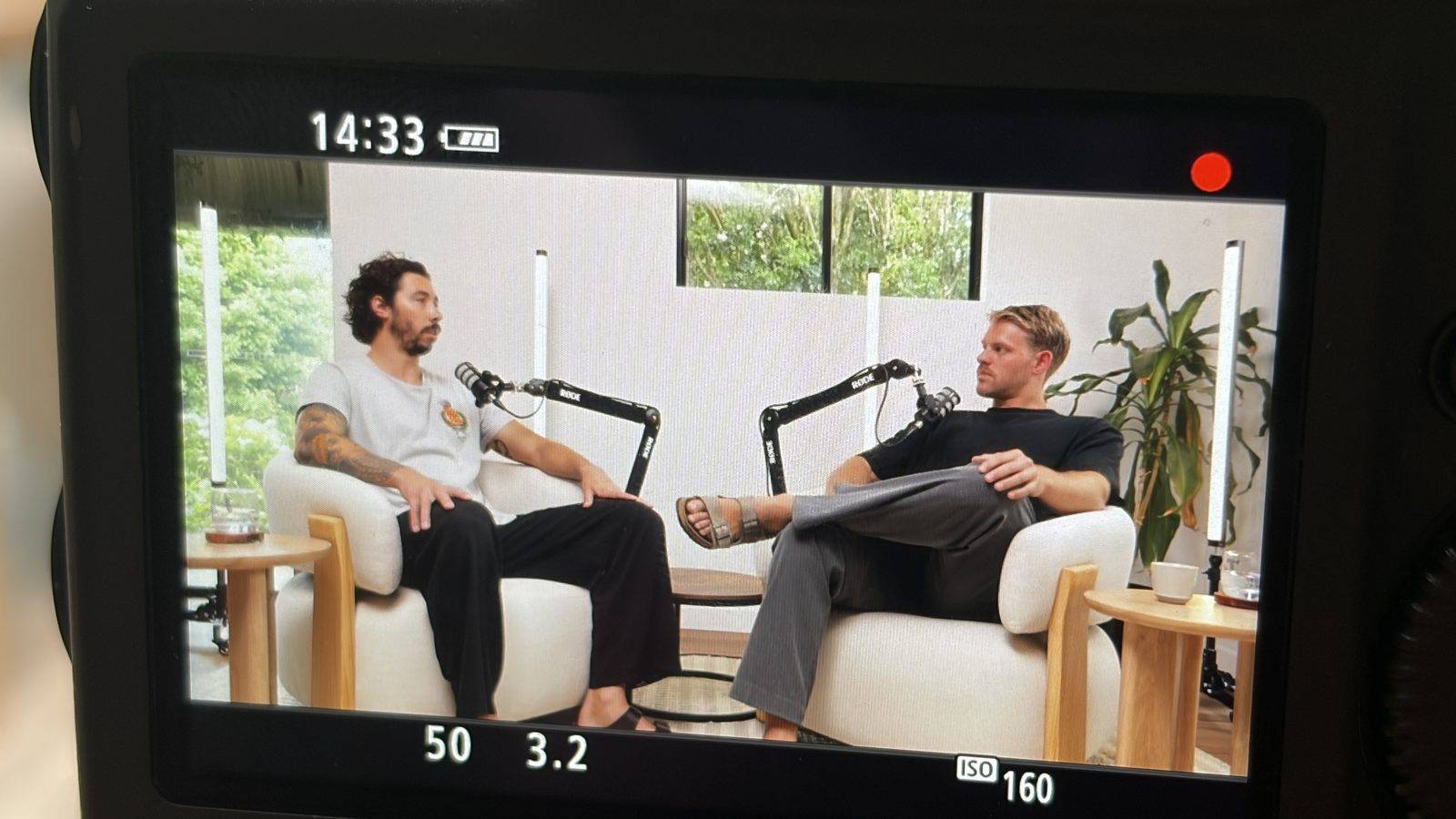
Cameron UsherWelcome to the first episode of Pursue Excellence. Today I'm sitting down with Grayson Bell. He's been one of my best mates for as long as I can remember. He's competed for Australia since the age of 17. He's completed a whole range of events from 50 breaststroke to 200 breaststroke. And today we're going to have a look a little bit more under the cover of what it takes to pursue excellence at the highest of levels, both in sport, in business, and in his everyday life. So, welcome to the show.
Grayson BellThank you. Thank you for having me.
Cameron UsherYeah, of course.
Grayson BellGlad to be here.
Cameron UsherSo, what are you pursuing now?
Grayson BellRight now, I'm pursuing the LA 28 Olympics in the 50 breaststroke. That has been my goal since I guess I was a kid. Not the LA specifically, but becoming Olympian.
Cameron UsherYou grew up in Papua New Guinea. What was your upbringing? Kind of tell us what got you into sport, what brought you to Australia and what's life been like since.
Grayson BellYeah, so I was born here on the Gold Coast, Australia. And we moved over to Papua New Guinea, to Western province called Irian Jaya, when I was a youngster, around one year old. My dad worked over there in the mines. So I moved over there with my sister and my mom.
Grayson BellWe moved over there and lived there for about 10 years. As a kid I loved it. It was a very remote community up in the mountain called Mount Zagahham. It was a international community, so a lot of kids from all over the world there. Very small school, maybe 50 kids in the whole school, and at most there was maybe four kids, as little as three kids in my grade. So, it was a very nice community and I loved it. Especially as a kid, like the freedom over there, being in the jungle, being able to explore the limits of the whole mountain. It was a very different lifestyle over there.
Grayson BellBut I loved it as a kid. I got to do many things. I have a lot of memories. I wish I had — iPhones weren't invented back then — so I could have all those memories captured on my phone to look back at. But yeah, dad made the decision, it would have been hard for him, which I respect, to move over there away from family, friends, to, you know, pursue his goals of, you know, raising a family and giving the best to us. So, it was a great time and yeah, I'm glad we did.
Grayson BellBut over there was actually when my Olympic dream started, was watching the Beijing Olympics 2008. I distinctly remember that I originally wanted to be a 100 meter track sprinter, and I wanted to compete for Australia as a sprinter on the track. And over there, there was no — we had sport through schools and stuff, but it was a remote community, so there wasn't a lot going on. But yeah, didn't realize until 20 years later, be still on the same pursuit but in different sport.
Cameron UsherYeah. So when did you go from pursuing the track to pursuing the pool? Cuz I imagine there wasn't lots of pools over in Papua New Guinea. So, how did you get into swimming, and when did that decision change from maybe the track, always the Olympics being at the forefront of your minds, but then it's going more into the water?
Grayson BellYeah. Well, there was one pool which we learned how to swim, and everyone swam in the local pool, which was actually a pretty decent 50 m pool they built there. But when we moved back to Australia permanently, I kept pursuing track running when I was 10, 11. And on top of the track running, I also did a range of other sports, including Nippers was also a big one, which I progressed my beach sprinting. But I was never into swimming at all, even until I was 12, 13, and about the age of 14 is when I started swim training, and the swim training was improving while my track running wasn't.
Grayson BellAnd about that age I was swimming at TSS, and my coach, Liam, if you remember Liam, he said to keep, you know, progressing my swimming, I'd have to take up more sessions. So, I'm going to have to reduce the number of track running sessions I have to do. And that was kind of about the age and decision I made to pursue swimming as a full-time sport.
Cameron UsherSo, before we get into the whole swimming side and, you know, that full transition into deciding swimming is my thing. You mentioned then that your dad, you know, he decided to pursue his career. You respected that. Would you say that he's always been a big role model for you?
Grayson BellYeah, the biggest role model. I love my dad. I love everything he's done. He's my best friend, the biggest role model, and he's the one I looked up to every day and the one guy I'd want to make proud. So when I see him and the hours he commits to his small business and how much he's committed and the sacrifices he's made, I just want to make sure I can do the same in terms of my business and sport and how I pursue life.
Cameron UsherWhat values do you think that he shows up as that you kind of look up to the most? Like, is there anything in particular that you look at, how he carries himself no matter what he does, that you're kind of like, if I can do that half to the level that he shows up as, I've made it?
Grayson BellIt would be his working ethic, and he's a hard worker. He spends a lot of hours working on his business, but on top of that, he's a very relaxed, humorous guy, which is real nice to see, with a lot of the stresses of owning a small business and trying to provide for the family, that he can maintain a good humor and have a laugh and have a relaxed, when appropriate, atmosphere around him.
Cameron UsherOf course. So, let's talk about then. So you came from Papua New Guinea, decided to come to Australia. You obviously have to adapt to the new climate, the new school decisions, and you decided that swimming was what you wanted to pursue. What was the mindset shift that allowed you to then make the decision that, all right, this is swimming? And then what does a day-to-day look like once you've made that decision?
Grayson BellSo it was about the age, like I said, I was about 14, and I was juggling a few different sports at the same time. So it was swimming, track and field running, as well as surf life saving, but mostly the beach sprinting. And with my first coach, my first swimming coach, we noticed how my swimming was improving and I was thoroughly enjoying it. I was loving it. And to get better out of it, I knew I'd have to sacrifice some track and field sprinting sessions to do more swimming sessions.
Grayson BellAnd eventually that kept growing to the point where it was the decision to be, let's go all in on swimming and drop every other sport and just commit to swimming, which was about, yeah, when I was 14, 15. And I had a great coach, Liam, and he helped me manage, you know, how to manage my swimming training, even when I was at school in year 7, year 8, and that's how it all started.
Cameron UsherYeah. Yeah. And for those that don't know, me and Grayson kind of met each other when we were around 13. And, you know, we both kind of were immersed in that environment. And I think it's a very rare environment. It was an all boys school. You know, you almost live there, right? You know, you go there, you get there 5:00 a.m. in the morning, you go to breakfast together, you go to school together, you then go back to the training pool, and then just repeat that for years and years and years. So go into that, cuz I know a lot of people really live that on a day-to-day, whether they're in school or professionally. You know, what does a normal day look like back in those?
Grayson BellYeah. Those were my fondest memories actually, back in school when we were first swimming, like me, Cameron and quite a few other friends I'm still in contact with. But back in that period it was, yeah, we had early starts because we had to finish training early. Wake up 4, 4:30, get to the pool at quarter to four — quarter to five, sorry — jump in the water, swim for 2 hours, possibly have gym after that.
Grayson BellAnd then it was nice because all the boys, we'd train together as like a family, and we'd all go to the — the most memorable, best breakfast we ever had as a kid was the boarders' breakfast, which we were lucky enough to have. It was $5, if I remember, at the start, and you get a ticket and you get a glorious feed of bacon, eggs.
Cameron UsherThat's what got you through training most of the days, right? Just knowing that you'd get that at the end.
Grayson BellYeah. Knowing we could get that boarders' breakfast and join the boarders at breakfast after a 3-hour training session. Yeah, that was the highlight of the morning, which made it well worth it. And then we obviously departed, went to our classes separately, did school as normal. Then at 3:00 we all came back down and, yeah, joined in for a second session of the day, which another 2-hour swim session.
Cameron UsherAnd what got you through that? You know, was that from that time that you decided that — was the Olympics always the goal that you had at the forefront of the mind? Was it smaller goals that you wanted to achieve on the way up to that bigger one? Like, what was it that was getting you up at 4:30 a.m. each morning?
Grayson BellOlympics was definitely in the back of my mind, but as a kid it was so far away. It wasn't at the foremost of my goals, cuz there was so many improvements. So the biggest ones were, at that period I was just wanting to improve myself and get quicker. I was very far off goals in terms of actually making Australian teams, junior teams. I wasn't very aware of the whole system in that regards, because I'd just come back from overseas. So all I knew is that I just wanted to keep getting better, keep getting quicker. I was a 200 breaststroker and I just wanted to get my times better.
Grayson BellYou know, I started qualifying for, like, Queensland states, but I'd be maybe top 20, and then next year I was like, okay, let's make a final, which I did. And then just wanted to progress that, make my first nationals, which actually the first nationals I missed a qualification by 0.01, and I was so upset. I was 14 or 15 at the time, and I was so upset because I saw my team members go away to compete and I had to wait a whole year. And then the next year I qualified, and I'm not sure if I made a final or I just qualified, which was great, which was, you know, the biggest improvement.
Grayson BellAnd I just kept pushing that, and then the following year I made a final, and the year after that I got my first medal, which allowed me to qualify for my first Australian team. And it was never a target. I just wanted to improve myself and reap the rewards then, back as a junior.
Cameron UsherAnd I think, like, we hear that now, right, and it sounds like, you know, they were just easy decisions to make and easy to progress. But I think what a lot of people don't understand is you just spoke about 3 years, four years of progression, and within those 3, four years you're training nine times a week. You know, if you times that amount of the sessions, there's hundreds of sessions just to eventually get into that team. And that mindset that it takes to do that is something that a lot of people, I think, aspire to, because no matter what you're aiming for, it is going to take a bit of time to achieve, right?
Cameron UsherSo what is the mindset things, you know, on the days where you're like, you know, is this even possible, you know, am I actually even improving? Cuz, you know, we all have those good and bad days, the good and bad sessions. What would you tell yourself? You know, how would you keep going in the times of doubt, the times of when you're tired or fatigue or you have life going on? What would keep you going?
Grayson BellI was fortunate enough I had a great network around me, you know, loving parents, a sister, a loving sister too. A great coach, and a whole brotherhood and a great training squad, that they were the foremost of my — the days when it got tough, they backed me up, and that really helped and aided me through those hard days.
Grayson BellAnd then those days when they're not readily available and it's just you in your own mind. It's really, at the start, when I first started training at that level, I didn't have the same mindset or mental preparation I did now as an adult, as a senior, which I've seen a sport psych for many years to help improve my mental state for that specific reason. So back then it was tough. Like, I didn't have that mental capacity to know how to get around that, which I eventually developed, especially with the help of the coach, and eventually just build upon that.
Grayson BellYou know, at the start, looking back at it, I did fail, like the times I gave up, but then next time I could do a bit more, and I'd keep pushing out those failures and, you know, hit those successes more and eventually just keep building. Say if you're trying to improve something, the time you spend doing that thing just far outweighs everything. Just the amount of time you actually put into it. Even if it's not at 100%, if you still —
Cameron UsherLike, as long as you're showing up, you're still doing better than, it's like, if you weren't doing anything, right? So even showing up counts as —
Grayson BellYeah. Exactly. Like 80%, and, you know, trying to improve that 81% next time you show up. If you're not feeling great, you still show up and do the work as best as you can, cuz, you know, even though you're not feeling 100%, you're giving 100% on that day of what you can do, which is, you can't beat that. You can't do anything more than that.
Cameron UsherIt's almost like that original saying, right, where it's like all you can do is give 100% of your 100%. And I think especially when you're growing up, maybe you're going through your, you know, puberty and all those types of things, you have those days where you physically can't give it any more than that, and that only might be like 60% of your capacity on a good day, right? So, yeah, I completely get what you're saying.
Grayson BellExactly.
Cameron UsherSo let's go back then. Like, as you were saying, of what I interpreted there, the main things that stood out was the people you surround yourself with, you know, being in an environment that supports you, but then you also said that you actively seek it out, going to a coach to help you mentally, because you understood the importance of that. You know, with px, and something that we built obviously is, you know, we understand how important that mental capacity is, because it's with you no matter what you do, right? It's in the decisions that you make, you know, from a work, family, career, training basis.
Cameron UsherWhat were the main things that you learned from going to, let's call it a psychologist, a sports psychologist? You know, what were you able to learn, and even today, what do you carry with you from those sessions?
Grayson BellI've been seeing a sports psychologist for a long time and I've learned so many things that have helped me a lot with swimming, a lot being as a professional athlete, as well as a lot of things that I take away from that into my personal life and business life. And so I guess one of the biggest things I've learned most recently, and probably towards the hard times when I'm trying to improve myself but you're not seeing those improvements, is really actually showing gratitude to how you — in life in general.
Grayson BellSo, one of the big things when I was younger was when I had a terrible session and I thought it was just one bad session and, you know, my training is over, like I'd really get in the dumps and I'm, you know, kicking myself, and it was really hard mental state to get out of, because you want to be the fastest at every session. You want to swim well and — sorry, no, it's super itchy.
Cameron UsherThat's right. That's right.
Grayson BellAnd then you want to, you know, you want to give it your all every session. And when you're not hitting those times in trainings, you're kicking yourself and asking yourself, "Oh, why?" And then you have your coach asking why, and it's all coming down. And it's those times when you leave the session and you got to look at it, like, with gratitude, like you get to swim professionally, like you get to train your hardest and give your maximum. And at that point you must have given your maximum, because you are at your most exhausted state.
Grayson BellAnd you come back and — oh, I was leading to this — of course, after major competitions actually was the biggest one. And say you don't hit your goals, which I've done countless times, you don't hit a personal best, you don't make the team, yeah, it does suck, and it really hurts and breaks your heart. But then as well, it's not the end of the world, and I'm thankful I've got so many things in my life, you know, like my parents, my dog Jupiter, my girlfriend. A lot of things I'm grateful in life. You know, I got a healthy — I got great friends, and so even though I did miss my goals, I still have a — I just show gratitude to what I have, and, you know, life is still going to kick on and it's great.
Cameron UsherYeah. It's going to keep moving. So, let's, like, give a real life example of that. So let's say this morning you were down at the pool, didn't do the session that you wanted. How would you put yourself in that state of gratitude instead of being attached to, you know, the negative performance that you had that morning? What does that actively look like? So we can just kind of give a real example to any of the people listening.
Grayson BellWell, I know some people for sure, they like to note and write. So they open up their note, they open up their phone and they like to type in what they're grateful for. Or me personally, I like to —
Cameron UsherWe could say just open up px and write in px.
Grayson BellYeah. I like to, while I'm driving from training, I like to just reflect on the session and really reflect on life in general and be like, what I'm looking forward to on the weekend. You know, even if it's simple as going to the beach, having a surf, and, you know, not getting caught up in having a bad session and really getting in the dumps, which would, you know, make me bit miserable for the rest of the day.
Grayson BellSo definitely just thinking about what you can look forward to, what you're grateful for, cuz you definitely have more than what people have around in the world. All you have to do is open up Instagram reels and scroll a bit and you can see how fortunate we are just to live in Australia, on the Gold Coast. We already have more than what most people would have.
Cameron UsherYeah. So it's really about just shifting that focus then, right?
Grayson BellYeah. Just shifting the focus away from, you know, one bad session out of how many actually good sessions you've had over the years. Like, what's 1,000 good sessions, but you can't be focused on that one bad session, you know?
Cameron UsherAnd it's always easier to focus on the negative than, as you said, you might do a thousand good sessions, two bad ones. And for some reason, we just focus on those two bad, right? So, it's definitely easier said than done, but I think that's an amazing tool that you've been able to do.
Cameron UsherSo let's go back then. So off what I know, and, like, I would love to hear it in your voice, is you made your first Australian team when you were 17.
Grayson BellCorrect.
Cameron UsherAnd then you didn't make a team again for 4 years.
Grayson BellClose. Yeah. I made my first Australian team when I was 17. And then once you turned 18 you're considered senior in the swim world, and that's when it took me three more years to qualify for my senior team.
Cameron UsherWow. So let's go back to that. So you got three years, year after year you're not making the team. You probably see all your mates transitioning into university degrees, careers. Maybe some have moved off, moved out of home. What's going on in your mind at that point? You know, how do you keep choosing to pursue that team in three or four years time?
Grayson BellI'd say one of my toughest periods was that period, trying to transition from a junior to a senior. It was, yeah, a lot happening in life. You know, you graduate school, you watch friends go out to university or move away, and a lot of things happening. You got your friends in swimming moving away from swimming and just chasing other pursuits in their life.
Grayson BellAnd I knew at that point I really just wanted to make my first Australian team, to put myself in the books, to have an Australian Dolphin number, and that one goal, that one specific goal, I just wanted to target that every year, and it took me, yeah, 3 years to do it. It was very difficult pursuit, but it was a great journey, and as well I had a great network of people around me to help me through those years which I didn't make it and push you on to another year.
Cameron UsherSo, it was more like the aspiration of just wanting that Dolphin number that kept you going.
Grayson BellYeah, it did help as well that I love swimming. I loved improving myself, and I was still at TSS at the time, which I loved. We had a great coach then with Chris Nesbit, and I loved every second of it.
Cameron UsherGreat. Okay. So, when you first made the team then, after that, what has your swimming career looked like since then?
Grayson BellIt's been, in some people's eyes you could say it's quite successful. In my eyes it's been a very, like, a roller coaster, as most people would say, like most people go through roller coasters in their athlete performance. After that first senior team — it was actually after the back, I missed qualification from the 2018 Commonwealth Games, which I was quite far off on qualifying. Not far off, but I came sixth, and my main event I was training for, the 100 breaststroke, and I entered the 50 freestyle as a extra event because it was at the end of the program, which I surprised myself, because I went to the final coming second.
Grayson BellAnd that kind of shook me and my coach, because there was kind of an opportunity to qualify for my first team then, for an event I didn't train for. And fast forward, I didn't qualify. I ended up getting fourth in that event, which was better than the 100 breaststroke, but it really opened up a new avenue to target a new event at the next competition, which was the 2018 Australian Short Course Champs, to qualify for the Australian team to go into China, which I targeted the 50 breast, 100 breast, 50 free, which I was very fortunate to qualify for.
Grayson BellAnd then after 2018, I made my first senior team. It was a great relief, you know, making my first Australian senior debut, getting my Australian swimmer number and really cementing myself in that. And it was a great experience traveling away as a senior team, getting that full experience. And then I had another repeat of when I had the same years trying to go from junior to senior, where it took me again another four years to make my second senior team.
Grayson BellSo from 2018 I didn't qualify for my second senior team till 2022, which was another tough period of a lot of, you know, missing out on teams, PBs, and a lot of successes in some ways and failures in some points, but it was a great journey. And then after the back of that, it was back to training, trying to qualify back on the team, and then the next big jump was 2024, where I broke the Australian record. So I had matched the Australian record in 2022 in the 50 breaststroke, which I'd matched the same time as a previous record holder, but 2024 I cleanly, I broke my own Australian record again, cemented that in the books.
Cameron UsherAnd that must have been an exciting point of you being able to reflect back and seeing all these ups and downs, the times we swam well, the times we didn't make the teams, made the teams, and then eventually kind of probably getting that recognition of Australian record holder. What did that kind of feel afterwards? Cuz I think that would have been one of the first points where maybe there's that self-realization of, you know, I'm not just one of these swimming numbers, the Dolphin numbers, I'm actually, you know, this is now in the record books. And as it stands today, right, you're still in these record books, right?
Grayson BellYeah, still.
Cameron UsherSo what did that feel like when you finally made, I guess, a goal that you were pursuing quite heavily?
Grayson BellIt was, you know, it was amazing, like seeing that and seeing my name there. But I took it as a nice stepping stone and a confidence boost to know, oh, I can, you know, I've achieved my goals and I've hit those times. Let's really ride this wave and, you know, target the next event and carry on the back of, yeah, I've got this record behind me. Let's carry it in the future and see what we can do.
Cameron UsherAnd I think that also goes back to the same thing we were saying from a mindset perspective before as well. It's also not getting too attached then to the successes. You know, as you were saying before, you can't get too attached to the bad sessions, but also when you have those very much highs, is also not getting too attached to that and thinking I've made it and I can take my foot off the accelerator now. It's having that probably non-attachment to then be able to continue on the track, continue going towards what you're pursuing, without that letting you sway your decisions daily, right?
Grayson BellYeah, 100%. Yeah. Being caught up. It's almost like, almost vaguely like an imposter syndrome, where you achieve those goals but you kind of step away from it in your own mindset, because you want to do more, and so you just keep targeting it, and you don't realize how far you've come until you look back at it.
Cameron UsherAbsolutely. And you do that a part of your gratitude practice? You kind of also look back and maybe give yourself that acknowledgement of what you have achieved along the way as well.
Grayson BellYeah. Yep. I still do to this day. On the bad days, if at training still, or even in a bad day in general, you know, like even in business or something, I look back and see how far I've come and what I've achieved, which has been amazing. And yeah, I still do that.
Cameron UsherSo, if we kind of look at what a day-to-day life looks like at the moment, what are you currently pursuing? What's, you know, getting you motivated? Obviously, there's px, there's swimming. How do you balance the two? What kind of does that day-to-day look like?
Grayson BellSo day-to-day for me, so my pursuits are px. I'm co-founder and CTO of px, which I've been helping build with my best mate Cameron, which we've been friends for ages. So that's one of my pursuits. My other pursuit is the 2028 Olympics in LA. And so for the past 12 months, I've been balancing those two pursuits at the same time.
Grayson BellAnd in a typical day-to-day life, I would wake up 5:00, I would go training, I would swim. I'd get there pre-swim, do 30 minutes of land work, swim for hour and a half to 2 hours, and then if it was a gym day, another 1 to 2 hours of gym, which would take me to about lunchtime. And then I'd spend the rest of the day building px and working at the px on the software, trying to improve the product and spending time in that. I would spend as much as I can on px, trying to improve that area. And after that I'd go home, see Jupiter, my golden retriever, take him for a walk, have dinner, and take a few hours to decompress after a big day, and repeat that 6 days a week, Monday to Saturday.
Cameron UsherAnd what does it feel like when you know you have a whole day worth of training, you've just been slammed a bunch of work and maybe deadlines you have to do? How do you navigate that? Cuz that's maybe a little bit different to the swimming life, where it's more physical and it's more about how much of an output you can do in a training environment, whereas work, you know, there's other people involved, there's other timelines involved. What's the difference in the mindset, and how do you balance the stress that maybe comes with both, when you have to do a whole day's work on almost most individually?
Grayson BellI guess being organized and having a good plan set out, so you know exactly what you need to do, when it needs to be due by in terms of deadlines and other people that are required to have things from you. So, making sure I have a very organized and planned out day to day, week to week, even month-to-month plan, so I know exactly, you know, what time I finish training, when I can be where, what I need to do, so I can fit everything in and make sure I manage both my training life and the business life, and even my personal life, to make sure they all fit.
Cameron UsherSo, it's been 3 years with you not making a team and your coach decides to move down to Sydney. What's going through your mind at that point?
Grayson BellAt that point, I had to make a decision to follow my coach down to Sydney and continue my journey under him, or find a new coach on the Gold Coast and stay home. And I made the decision — at that time I was studying, I want to continue my studies for the future. And there was another coach I was interested in, because that was about the same period I was transitioning from a 100 breast more into a 50 freestyle swimmer. So from an aerobic based program into a sprint based program. And I took that as the opportunity to not follow my coach down to Sydney and move to Somerset with Ash Callus and train under his wing at the end of 2021, after the back of the Tokyo Olympics.
Cameron UsherSo that was kind of like your first transition in coaching styles as well, right? How did you find his coaching style compared to Chris, who you had almost swum with, you know, from the age of 13 onwards?
Grayson BellYeah, it was a big difference, cuz I had that one coach and I was at TSS for a very long time. So almost, I'd say, I was 14, six, 8 years, give or take. And transitioning to a new coach was, it was a good transition. Ash was a great coach, and there's a lot of great coaches around, and as long as you communicate well with your coach and you both understand each other, what your goals and what you need to put in and sacrifice in, you can get a lot out of any coach that you are with.
Grayson BellAnd so I worked very well with Ash and had a lot of success with him, and I still very fond on those days, and yeah, he's a great guy and great friend. So it was great to have him as a coach, because he had the experience, he had the track record, he had the history, so he knew what he was talking about, and it was great to learn from the best.
Cameron UsherAnd how do you find that athlete and coach relationship? Because it's probably very different coming from Ash compared to Chris, who was in his 60s maybe at the time. What is the importance of that coach and athlete relationship, and how important do you carry that with you when deciding to transition into different squads?
Grayson BellYeah, like, they're very two different people, but their goals and what they want to achieve is still the same. They want their swimmers to do the best. And they may have different ways to achieve that through their training methods, but they still want the same outcomes. And they're two completely different people, but they wanted the same thing for the athletes. They wanted what's best, like wanted us to achieve our best.
Grayson BellAnd having that relationship is the most important thing in that training environment, because you see them 20 to 30 hours a week, on a full-time job. And so you got to be able to work with them and understand them, and it's almost like having, yeah, a new friend on pool deck, a friend that can really criticize you in good ways to help you improve, you know, and not be just — as well that someone in your corner, but really want the best out of you.
Cameron UsherAnd I think, as you said then, it's about them understanding what you're pursuing just as well as you understand it. Right? It's like you're both working towards that same target.
Grayson BellYeah. Yeah.
Cameron UsherSo, how do you articulate to the coach at the start of a season, after not making a team, that this is my goal, this is what I want to achieve, so you are both aligned? What does that conversation look like?
Grayson BellYeah. So, a nice sit down conversation. Excuse me. It's really, yeah, meeting one-on-one with the coach and really talking it through, like exactly what your goals are, real specific goals, objectively. Setting out timelines and how you want to achieve the goals, and really having not just one meeting, but multiple meetings, with a meeting at the start to really understand the goal. And as you progress towards your goal, you have more meetings to see how the progression is and see if anything needs changing. But it's a continual thing that happens over the course, from when you first added your goal, to say in swimming, until the trials, when you're trying to qualify or do a personal best.
Cameron UsherAnd when do you make the decision that your goal changes? You know, if you, for example, have multiple bad sessions, does your goal shift straight away? Does it take you to do a whole season for your goal to change? You know, how do you make sure that you're both working towards that same thing consistently?
Grayson BellI guess we have multiple goals. So, the major goal of course is, you know, making an Australian team, or could be becoming world champion or making a world medal. And then you have all your sub goals and your minimum goals. Say you want to improve your start time, you want to improve your technique, and you have a lot of little goals you target. And your major goal always stays quite, almost, yeah, stays the same. The pursuit for that major goal stays the same. But the sub goals to reach that can change quite a bit.
Grayson BellSo in terms of how you can get to your sub goal, say you want to do a personal best in the 50 freestyle, you need to drop 0.4. And so you can work on your start, and how you work on the start can change depending on, you know, the periods of time you're in, the phases, there's multiple things, how strong you are, and if one way isn't working and you've done the progression, then you swap that goal and target another area, like mobility, or, yeah, there's multiple ways of doing it.
Cameron UsherAnd I think what a lot of people don't understand is, when you're saying it's divided into all these minimal goals, usually with each of those smaller goals, there's actually a coach underneath that that is just focusing on that. So, how many coaches you actually working with? Obviously, you have Chris or you have Ash or anyone else who is your head coach, but who else is involved in this journey?
Grayson BellI'd at least had a minimum of three coaches, I would say. There was, I guess, the main coach, your swimming coach, who overlooks the whole swimming program and really is there on pool deck most of the time. And then I was fortunate enough to have access to a strength and conditioning coach, whose main focus was anything gym related to complement my swim training. Anything in the gym to get stronger, faster, more powerful, more mobile as well.
Grayson BellAnd then on top of that, I love to have a nutritional coach, a nutritionist, who would help me progress my nutrition, my diet, what I eat day-to-day in around the sessions, you know, cuz each session has different requirements. So, I had to make sure I ate, for example, more carbs before big aerobic session or more protein after a big gym session. And they all worked very well together. It was a great work environment. All three coaches would communicate with each other and everyone understood what my goals was and what I needed to achieve. And so it was a very well-oiled machine, like every single part was fine-tuned to this one goal.
Cameron UsherPlus you also had the mental coach as well, right?
Grayson BellAnd the mental coach. Yeah. So there's four coaches there.
Cameron UsherAnd do they communicate with one another?
Grayson BellYep. They always communicate with one another, like with your consent of course. But yeah, they always communicate because they want the best out of you. Like, they're here to help you. And so they're always communicating each other, and if one area is not where you'd like it to be, we can speak to the other coaches and figure out, well, why isn't this working? Let's alter another area to help develop that sense.
Cameron UsherAnd I think that's where, and I can only speak for myself personally, is you begin to understand the importance and the correlation between your movement, your physical, your nutrition and your mental, right? So for you as an athlete, you're speaking to all these coaches. You may be as young as 13, you may be, you know, 25. How are you interpreting all of this information and knowing what you should be doing day-to-day based on the input they're giving you?
Grayson BellIt was the plans they set out, which, since they're great coaches, they set out really easy to understand plans that when I was younger, when I was a teenager, even as an adult, I could understand the plans and either have it there physically in front of me, and now mentally I know what I need to do, and just follow those plans and follow the routines, and they really set it out a way that would make sense. And then I could see it, and yeah, it goes hand in hand with how I organized my day back in school and back now.
Cameron UsherSo in 2021 you moved to Ash. What did he do differently that allowed you to begin making the teams and working towards the Australian record that you were able to achieve in 2024?
Grayson BellHis program structure was quite vastly different in a time back then. I came from a big aerobic program where I started as a 200 breaststroker. So I was swimming upwards of 50 kilometers a week, building an aerobic base for 200 breaststroke, which I carried a lot of that training even as I did the 100 breaststroke and the 50 freestyle.
Grayson BellAnd when I moved to Ash, that got reduced quite a lot, down to maybe 20 km, and more a, I guess, more of a power sprint sort of environment, where all the other athletes were also sprinters, 50 and 100 swimmers. And so we were all training the same, doing very similar gym sessions. And I think that allowed me to really hone in on just that environment of a 50 freestyler, which worked out very well when I qualified for my second team after 4 years.
Cameron UsherAnd you were probably used to doing, you know, 40, 60, maybe even more than that Ks a week in the pool, down to this 20 Ks that you're doing with Ash. Did you ever doubt his training methods? Did you ever second guess it? Did you ever doubt yourself for making that transition? Because I can only speak from an athlete perspective as well, and you want to get the most out of the training, and sometimes it's easy to second guess the coach. How do you fully back that decision even in the times that you don't feel like it's, you know, right for you?
Grayson BellThe doubt. Yeah, the doubt is always there. Not always there, but there are those days that doubt comes in, and especially on those hard days when you're like, this isn't working, like, is this program for me? But you have to back yourself if you made the decision, and you got to realize that every athlete will go through the same things, and you just have to back yourself that this is the right — and if you've made out the plan well and you know what you need to do to get better, then you know this is how you're going to do it.
Grayson BellAnd you just have to back yourself, and really, you know, that's where the mental coach came in and really talked you through those days and really worked through those hard days. And yeah, just kind of have to back yourself. And it did help as well that my coach Ash was, he was Olympic champion. He's been there and he's done it himself. And so that gave me confidence to know that if he's done it, he's done this program, I can do it myself, cuz why not?
Cameron UsherAnd, like, once again, for those that don't know, you actually then made the decision to not only back him as a coach, but then back yourself as your own coach, transitioning into doing your own thing.
Grayson BellYes.
Cameron UsherTalk us through that.
Grayson BellSo after 2023, this was about the same time that Cameron McEvoy started coming back into the space, into the swimming space, after a long time away, and he started implementing his own training methods, which started getting word around town, and I saw that as a great opportunity to target myself, because he'd just come in and he'd done some PBs after being away for so long, and, you know, he achieved a lot of goals he set that too. And I saw great inspiration from that. And I knew if I could, when I speak to him, I could get that same knowledge and see what I can achieve. And so that's how I started, and I started training myself and, you know, the same sort of training philosophies and trying to target myself.
Cameron UsherSo, how did you, you know, begin putting your programs together? Because, you know, stepping away from having a head coach for as long as you've essentially been a professional athlete, to then doing your own programming, mentally, physically, nutritionally, in the water. Where do you start to then begin your programming around that?
Grayson BellWell, I was fortunate enough, cuz I was old enough, that lots of experience with a lot of coaches. I knew exactly how to program it and what I need to do, but I didn't do it by myself. Even though I was training by myself, I still had access to a lot of nutritionists, head coaches, Cameron, and they helped guide me as well in terms of program structure, what I needed to do. So it was never by myself fully. I always had a great support network and a lot of people in my corner helping me achieve my goals and my pursuits, and it was just me now taking the foremost, you know, steering the ship, instead of another head coach on top.
Cameron UsherSo at the time when you're training yourself and you're relying heavily on essentially four coaches, there's your mental, your physical, your nutritional coach, and then maybe Cam for a bit of guidance. There's not really anyone else who can give you that feedback that you're after at that time. What would the mind session look like? So with the mental coach, what would they ask from you or challenge you about?
Grayson BellOne of the things I did a lot back then was I did a lot of journaling. So after a session, I would reflect, after I did the session, whether it was a swim session or gym session, or if it was the end of the day, I would reflect on what I did on that training day. So what I did well, what I didn't do well, and what I need to improve on.
Grayson BellAnd I had that journal and I had a whole plan set out towards every week until the next Australian competition. And every day I would reflect on that. And I would also, if it was a bad session, I would show gratitude to get me out of a bad headspace. And if it was a good session, I would, you know, I'd compliment myself and take in that confidence into the next session.
Cameron UsherSo let's choose the buildup to your short course Australian record. You're 6 months out, 3 months out. What is in that journal at that stage? What have you planned to do versus what were you actually able to implement from that plan?
Grayson BellIn my plan, I knew my goal at the end of that plan in the journal was to break my own Australian record, but break it fully this time. And working back from that, I knew that I had to improve my start and my turn time. And if I could just target those two things, that would allow me to drop 2 a second and break that time. And so, working back from that, we implemented a plan to, you know, what I had to do to improve my start, get stronger legs, more powerful off the start, improve my breakout.
Grayson BellAnd so we work back from that. And in the journal, I journaled my start time and turn time almost every day, or as much as I could, which allowed me to — whenever I could get some professional timing — see the progression of that turn and start time, to see what I need to do to break the Australian record at that comp.
Cameron UsherSo you're able to break down the broader goal of, okay, in 3 months time I want to achieve the Australian record, and you broke that down all the way to very much two intentional things.
Grayson BellYeah. The turn and the start.
Cameron UsherYeah. So would you say that that's something a lot of people can carry with them, if say they are working towards something in x amount of time, is, do you think doing these small one percenters, and is this a belief that you have off your experience, can add up to achieving the larger outcome in the end, even if it doesn't feel like they're doing a substantial amount at that point?
Grayson BellYeah, absolutely. So if you set out, you have your major goal, but you need those smaller goals in between to really see your progression, because if you have the main pursuit of the end without the smaller goals, you can't see how far you're coming, say, 6 weeks out of week 12, and getting caught in that headspace of seeing if you're not getting towards your main pursuit at the end of 12 weeks. And you look back and you haven't seen the little goals you've hit, you get caught up in thinking yourself you haven't been getting to your pursuit.
Grayson BellBut if you have all those small goals, you can look back and see, oh, say I want to lose 10 kilos, you know, I've already lost 0.7 here, 0.3 here, I progressed, like, each week. Oh, I may have put on 0.3 kilos here, but the next week I lost 0.6, and if you graph it out, you can see those small goals, and you can take rewards and confidence in yourself when you hit those small achievements on the way.
Cameron UsherIt was something one of my favorite coaches I used to work with, he always used to say, well, you don't track, you can't measure. And I think that goes hand in hand with everything, whether it's, you know, working on the smallest of things like starts and turns, or, as you said before, if it's someone just losing, you know, 10 kilos in a 3 month span. It's like, if you're not tracking it consistently, how are you meant to measure whether what you're doing is working?
Cameron UsherAnd I think that then also goes back hand in hand to what you were saying before: the communication that you have with the coach that is doing that programming is fundamental, because if your measurements aren't improving as you get closer to that date, you know, you have to change what your way to achieve that pursuit is, right?
Cameron UsherSo I think for every young swimmer, you know, everyone wants an Australian Dolphin number. You know, what does that mean to both you as an individual, but also, you know, for us as a swimming community, what does that mean at a whole? Like, what does that stand?
Grayson BellIt's probably one of the biggest goals every swimmer wants to achieve, you know, besides of course, you know, Olympics, Olympic gold, is really making their senior Australian team and really getting their debut swimming number. And it means a lot to me. You know, when I first achieved it, the first thing I did was I found my dad, cuz he wasn't there when I achieved it. My mom was fortunately there when I did, so I was very grateful she was there.
Grayson BellBut it was just a nice way to cement all the hard work I've done, and really a way to express or show all the hard work I've done and what I've committed to the sport and sacrificed, in terms of a number, which shows the great history and culture we have in swimming as a nation. You know, we're surrounded by water, so swimming's in our blood, and we've got, like, yeah, a great community, and being able to be a part of that and cement it is again what I'm very grateful for. Like, I even have it tattooed right here. A big thing is getting tattooed. I don't know if you can see that on the camera.
Cameron UsherBut give us flex.
Grayson BellYeah, this one.
Cameron UsherThat's from three move sessions. px.
Grayson BellBut a lot of swimmers will get their swimming numbers tattooed cuz of how much it means to them. And my swimming number, I was 800. When I knew I qualified and I went back and saw the last number was 799, and I knew my last name was first on the list on alphabetical order, I knew it was going to be 800. I thought, "Ah, that's sweet as, pretty great number." And so, yeah, I decided to get this, which was the Omega symbol, which is the 24th letter of the Greek alphabet, which equates to the 800, right? And so, yeah, I have it on me for life.
Cameron UsherYou know, Cam is a name that you've mentioned a few times here. And I think, as you said before, swimming is a sport where there's a very good community. You guys head away on teams together, you train together. Cam being a close training partner of yours, both at TSS and as you transitioned away from that squad. Talk a little bit about that relationship, and then also what it means when you're on these teams as a community. What is that camaraderie and day-to-day like?
Grayson BellYeah, so I trained with Cam back at TSS towards 2018. He came to TSS actually in 2018, after we made our first — when I made my first senior team, and we traveled away together, China, and we competed on the relay and we competed against each other. And, you know, from the moment he joined I knew he was a incredibly smart guy, super intelligent, and he knew what he wanted to do, and we trained together a lot, and back then the training program was quite different, and he had a vision of where he wanted to go.
Grayson BellAnd when our coach moved to Sydney and I moved to Somerset, he decided to do a different route and, you know, take time away from the sport and really process on what he wanted to do, and had to plan out what he wanted to do in swimming and, you know, I guess what he want to do in general.
Grayson BellAnd so when he came back about 2 years later with a whole entirely new philosophy and training, I was just in shock at what he'd done, on the amount of research he did and what he had planned forward, and actually to see him hit those goals, what he's managed to, you know, plan and speak with all the coaches he's been in and all the contacts. It's been great to have him as, like, you know, a great friend and, you know, a training partner and also a good, you know, rival in the pool.
Cameron UsherAnd if you could break down what he's been able to do so well, especially recently, what would you break it down to? What is the values, the philosophies, the training methods? If you could summarize that in the most specific way, what is he doing that's different? Why is he succeeding, and everyone around him succeeding as well?
Grayson BellHe really broke down exactly what he need to do to reach his goal, and that was target in the 50 freestyle. He broke it down even more than I've ever seen in any sort of sense, in terms of exactly what he need to do to reach his goal in that specific event, which was every single sub area, like strength, nutrition, body, physiologically, like every single area he thought of, and he planned a whole structure around it.
Grayson BellAnd the one thing he did really well was, you know, ignore the background noise, that was all the doubt from other areas, and, you know, trust himself, back himself, and believe that he's done the research. He knows what he needs to do, and really implement that, and he's proven it, and now everyone can see that he's done it and he's done the research and he just backs himself.
Cameron UsherSo, self-belief.
Grayson BellYeah. Yeah. And self-belief is a huge thing, which, yeah, he's amazing at.
Cameron UsherAnd what does the pursuit of excellence mean to you? Cuz I think these are all outcomes. You know, in sport it's the Olympics. In business, it could be whatever it is, this amount of people that you've been able to help through the app. But there's obviously a journey that goes along with that. There's the day-to-day. So, what does the pursuit of excellence mean to you day-to-day?
Grayson BellDay-to-day would be all the little goals I have in life while I'm handling both my swimming career as well as a business, personal life, like my family, just trying to pursuing excellence in all the little one percenters. You know, like in the gym I want to get this little bit stronger, this little bit more mobile, flexible, more powerful.
Grayson BellIn the business, I want to be able to be more efficient in what I do, you know, be able to help grow the business just that little bit way, if there's new things, methodologies that I can find and really help speed up that progress. And then, you know, be that better friend. You know, there's a lot of pursuits that go into the whole pursuit of, like, the whole journey of life, and there's quite a few of them which I like to target.
Cameron UsherAnd it's breaking down — I think similar thing that keeps coming up is breaking it down into the day-to-day stuff. You know, what can I do today to get me that one step forward? What is this small goal I can work towards and measure and ensure that I achieve?
Cameron UsherWhy did you build px?
Grayson BellSo, I was fortunate enough, in an elite athlete environment, I had many coaches helping me pursue my goals, pursue my excellence, and I wanted to help build that for everybody and have that one coach which everybody can use and really pursue their dream. And everyone has their own pursuits, and the one thing I would love, if even if this app made one person healthier and happier, then that's success, you know.
Cameron UsherSo, what would you say to someone, they've got their first pursuit in mind. You know, it's coming close to the new year. They've got a resolution, but they have no idea where to start. What would you say to them?
Grayson BellWork at it every single day. You know, commit 100%, even though the days you're not feeling 80, even 100% of your effort, even if you're not 100% capacity. And the self-belief, you know, the confidence that you back yourself and, you know, believe in yourself.
Made from the episode’s captions and tidied for reading. The recording is the record.
Frequently asked questions about this episode
Should I train if I do not feel like it?
In most cases, yes, at the level you can manage that day. Grayson Bell says showing up at 80 percent still moves you forward, because the total time you put in matters more than any one session. If you are injured or ill, rest and talk to a professional.
How do you stay motivated after a bad training session?
Grayson reflects on the session on his way home, then names what he is grateful for and what he is looking forward to. He says one bad session out of a thousand good ones should not decide how you feel.
How do you set goals for training?
Set one main goal, then work back to the two or three smaller goals that move it most. Keep the main goal fixed and change the smaller goals when they stop working.
Who is Grayson Bell?
Grayson Bell is an Australian swimmer from the Gold Coast who has competed for Australia since he was 17. He is a cofounder of px and its CTO, and trains six days a week alongside his work.
About Grayson Bell
Grayson grew up between the Gold Coast and a remote mining town in Papua New Guinea, started swim training at 14 and has competed for Australia since 17. Today he trains six days a week and builds px with Cameron, his best mate since they were 13.
About Pursue Excellence
Every episode follows one person and what they are working toward: athletes, coaches and experts in how we move, think and eat. You leave every episode with one thing to take into your own week.